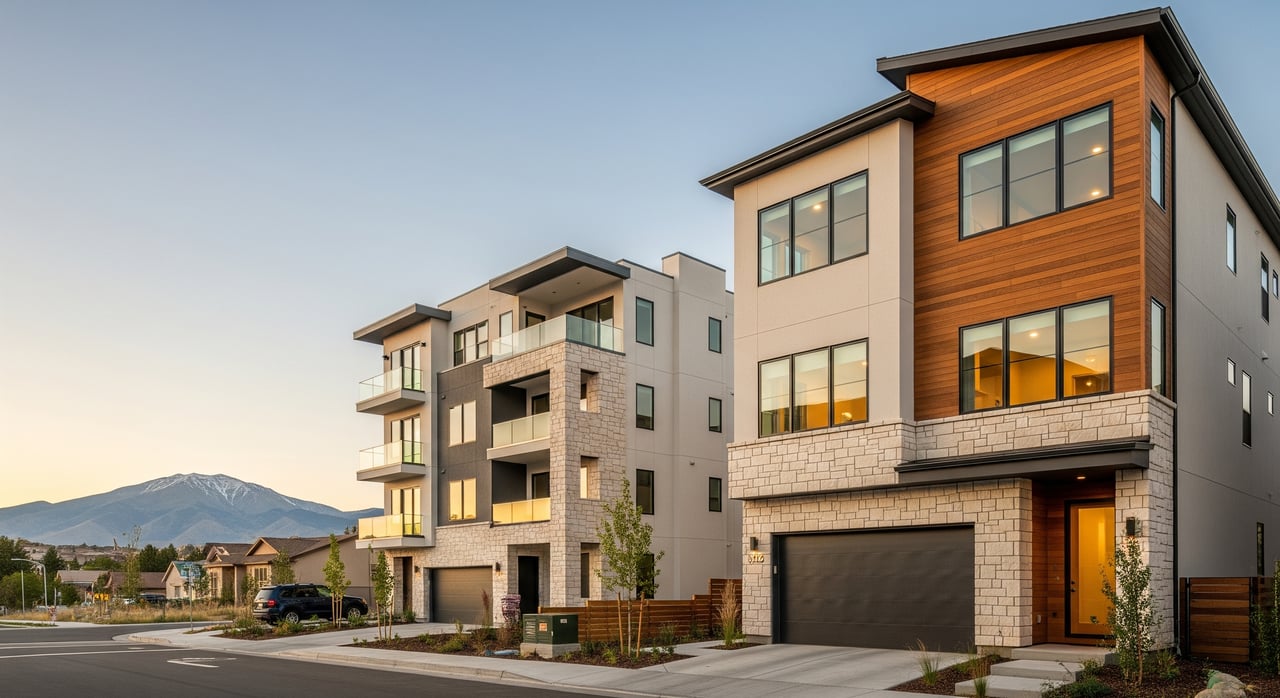
Choosing Between a Townhome and Condo in Reno
Thinking about a low-maintenance place in Reno but not sure whether a townhome or condo is a better fit? You are not alone. First-time buyers and downsizers often want a lock-and-leave lifestyle without surprises in financing, HOA rules, or upkeep. In this guide, you will learn the real differences in ownership, costs, and day-to-day living in Reno’s Downtown and South Reno neighborhoods, plus a practical checklist to shop with confidence. Let’s dive in.
In a condominium, you typically own the inside of your unit from the drywall in. You also share ownership of the building’s common elements like the roof, exterior walls, hallways, elevators, landscaping, and land. The project is governed by recorded CC&Rs that define unit boundaries and what the HOA maintains.
Nevada’s common-interest community laws set how HOAs operate. Those rules affect budgets, reserve studies, records access, and assessments. For you, that means the condo’s governing documents and HOA health matter as much as the unit itself.
Townhomes come in two flavors:
Functionally, fee-simple townhomes live more like single-family homes. Condo-form townhomes live more like condos. The difference shows up in who fixes the roof and how lenders review the property.
In Reno, seasonal needs matter. Snow removal in South Reno townhome communities can be an HOA line item. Downtown condos may rely more on building staff or city services for sidewalks and streets.
Request these items early so you can evaluate risk and costs:
These documents show who pays for what, how well the HOA plans for big repairs, and what restrictions could affect your lifestyle.
Reno’s high-desert climate means landscaping and irrigation are ongoing expenses. If you are looking Downtown, also ask about any floodplain considerations near the Truckee River.
Many lenders treat fee-simple townhomes like single-family homes. That often means no project-level condo review is needed. By contrast, condominiums can require project approval or a detailed review, especially for FHA and VA loans.
If you plan to use FHA or VA, verify early whether the condo project meets program requirements. Even with conventional loans, lenders consider project financials and owner-occupancy ratios. This affects both your loan today and your future resale pool.
Confirm the association’s master policy type: all-in, bare-walls, or walls-in. Ask about master policy deductibles and whether you need specific loss assessment coverage.
Fee-simple townhomes are usually taxed and titled like single-family homes. Condos are titled as a separate unit with an undivided interest in the common elements. It is smart to confirm parcel details and current taxes with county records once you have a specific property.
Downtown offers walkability to restaurants, entertainment, and the Riverwalk. Buildings range from loft conversions to mid-rise condos. Many projects include amenities and building maintenance, which can mean higher HOA dues but less exterior work for you.
Consider parking assignments and guest parking. Ask about proximity to the entertainment district, potential noise, and the building’s age and construction type. For properties near the Truckee River, confirm any flood considerations.
South Reno neighborhoods, including the South Meadows and Damonte Ranch corridor, feature newer attached communities with garages and easy access to parks and trails. Many are fee-simple townhomes, which can simplify financing and broaden future resale options.
HOAs here often focus on front-yard landscaping, snow removal on private roads, and community amenities like pools and parks. You typically have easier parking and direct garage access. Commutes to I-580, the airport, and employment centers are straightforward.
Reno and Washoe County regulate short-term rentals. Many HOAs also limit or prohibit them. If rental income matters to you, verify municipal STR rules and the HOA’s leasing policies, including any rental caps and minimum lease terms.
Use this list before you write an offer or during your due diligence period:
If you want maximum lock-and-leave living with exterior maintenance handled, a condo can be a great fit, especially Downtown. You may pay higher dues, but you also offload big-ticket upkeep. If you prefer more control over the structure and want simpler financing, a fee-simple townhome in South Reno may suit you better.
There is no one-size-fits-all answer. Match the ownership type to your budget, maintenance tolerance, and lifestyle priorities. A careful review of the HOA’s documents will tell you more about your real costs than a quick look at dues alone.
Ready to compare options and run the numbers on specific buildings and communities? Reach out to Benjamin Florsheim for local guidance, from Downtown towers to South Reno townhome villages. We will help you review HOA documents, confirm financing paths, and choose the right lock-and-leave home with confidence.

Real Estate
Teething Nights, Turbulent Markets, and What It All Means for You

Real Estate

Real Estate
Real Estate

Whether you're buying, selling, or investing, Ben Florsheim brings deep Reno-Tahoe knowledge and 13+ years of proven success to help you navigate the market with confidence and clarity.