Old Southwest Reno Architecture: A Homebuyer’s Guide
If you expect Old Southwest Reno to look like one neat row of matching historic homes, you may be surprised. This part of Reno is more layered than uniform, with everything from early cottages and Craftsman bungalows to formal period-revival homes and later ranch houses. If you are trying to buy here, understanding that mix can help you spot what fits your lifestyle, what may need closer inspection, and what makes the area so appealing in the first place. Let’s dive in.
Old Southwest Reno is best understood as a historic residential area with multiple architectural chapters, not one single style. City and historic district documentation shows that the area developed over time as Reno expanded from streetcar and pedestrian neighborhoods toward more automobile-oriented growth.
That is why you may see a small cottage on one block, a more decorative revival home nearby, and a mid-century ranch a few streets over. In neighboring additions, some areas were built more consistently, but the broader Old Southwest identity comes from variety. For a buyer, that mix is part of the charm rather than a red flag.
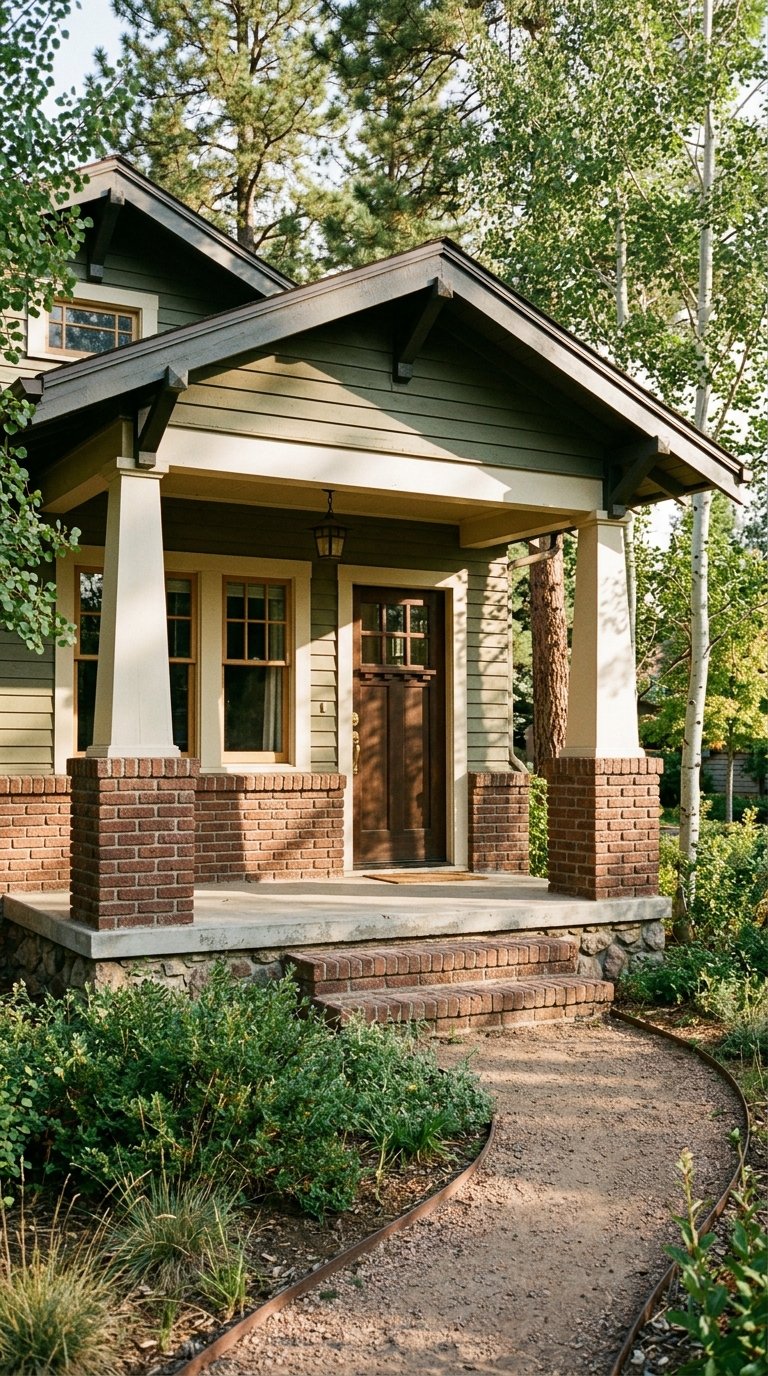
Craftsman bungalows are one of the styles many buyers associate with Old Southwest Reno. Common features include low-pitched roofs, wide eaves, generous front porches, and the use of natural or native-looking materials.
A local example on Ridge Street reflects those details with a low-pitched hipped roof, wide eaves, a prominent porch, and a brick exterior. In practical terms, these homes often feel welcoming from the street and carry strong early-20th-century character.
If you are drawn to a bungalow, you are often choosing character over sheer square footage. These homes typically have more compact layouts than newer properties, and the porch is often a central part of the home’s visual identity.
That can be a great match if you value original details and a sense of architectural warmth. It also means you will want to look carefully at how much of that original character remains.
Old Southwest Reno also includes homes influenced by Colonial Revival, Tudor Revival, and Italian Renaissance Revival design. These styles usually read as more formal and decorative than Craftsman bungalows.
Colonial Revival homes may feature symmetrical facades and more classically inspired entries. Tudor Revival houses are often marked by steep roofs, large chimneys, tall casement windows, and brick, stone, or stucco exteriors. Italian Renaissance Revival homes may include red-tile roofs, wide eaves, and stucco walls.
These homes often stand out because they feel more architectural and customized. Some were built as signature properties rather than as standardized homes, which can make them especially memorable.
If you like homes with stronger visual presence and more decorative detail, this category may be where your attention goes first. Just remember that the very features that create charm, like chimneys, stucco, or complex rooflines, are also worth close review during due diligence.
Not every home in Old Southwest Reno is prewar or highly decorative. In the Newlands area, ranch-style homes became common starting in the early 1940s and remained prevalent through the 1970s.
These houses usually have a broad, low shape, shallow-hipped roofs, wide eaves, picture windows, and attached garages. The district also includes Minimal Traditional homes, which tend to have simple plans and compact roof forms.
For many buyers, ranch homes feel easier to live in day to day. Their horizontal layouts can feel more open and practical, and they often align well with buyers who want older neighborhood character without the formality of an earlier architectural style.
At the same time, these homes may have seen more changes over the years. Later additions or altered windows are worth evaluating closely, especially if you care about how true the home remains to its original design.
Old Southwest Reno also includes custom estates and architect-designed homes mixed in with more modest houses. Historic district records note that the area combines small cottages with larger high-style estates in a way that is unusual for Reno.
For you as a buyer, that means inventory can feel highly individual. Two homes with similar square footage may offer very different architecture, curb appeal, and upkeep needs. In this neighborhood, the specific house matters just as much as the address.
Reno’s climate plays a big role in how older homes age. NOAA climate normals for Reno Tahoe International Airport show an annual mean temperature of 55.0 degrees and annual precipitation of 7.35 inches, and local climate reporting describes Reno as having dry summers, wet winters, and winter snowfall.
For a homebuyer, that means exterior materials matter. Roofs, drainage, paint, masonry, stucco, porches, and older windows can all feel the impact of seasonal weather over time.
Historic district documentation points to several areas that deserve extra attention in older homes. Windows and doors, chimneys, masonry or stucco, and later additions are recurring themes.
That does not mean every house has a problem. It does mean you should look closely at whether updates were done in a way that supports the home’s design and whether the exterior elements appear well maintained.
One of the most important things to understand is the difference between recognition and regulation. According to the City of Reno, National Register listing is honorary and does not change property rights.
Local City Register listing is different. If a property is locally listed, substantial exterior work may require a Certificate of Appropriateness and city review.
The city also notes that interior alterations and ordinary maintenance are generally exempt unless they materially change the appearance. That distinction matters if you are thinking ahead about improvements.
Before you buy, it is smart to confirm whether the property sits in a historic district or is listed on a local register. That simple step can save you time and help shape realistic renovation plans.
Old Southwest Reno rewards buyers who balance style preferences with careful property-level review. As you narrow your options, keep these questions in mind:
Those questions help you move beyond surface appeal. A beautiful facade matters, but the best buying decisions come from understanding how style, condition, and future plans all fit together.
If you love porch living and early-20th-century character, a Craftsman bungalow may feel like home. If you prefer a more formal look and stronger decorative details, a Tudor, Colonial Revival, or Italian Renaissance Revival house may be more your speed.
If you want a simpler layout and easier everyday flow, a ranch or Minimal Traditional home could be the better fit. In Old Southwest Reno, there is no single right answer. The goal is to match the house to how you want to live, while still judging each property on its own merits.
Buying in an architecturally varied neighborhood takes local context and careful evaluation. If you want help comparing homes, understanding what makes one property stand out from another, or planning your next move in Reno, Benjamin Florsheim can help you navigate the process with clear, neighborhood-specific guidance.
Whether you're buying, selling, or investing, Ben Florsheim brings deep Reno-Tahoe knowledge and 13+ years of proven success to help you navigate the market with confidence and clarity.